Hip Replacement Surgeon in Surat
Hip replacement may be considered for selected patients with advanced hip arthritis, avascular necrosis (AVN), or other severe hip-joint damage causing persistent groin or hip pain and loss of mobility.
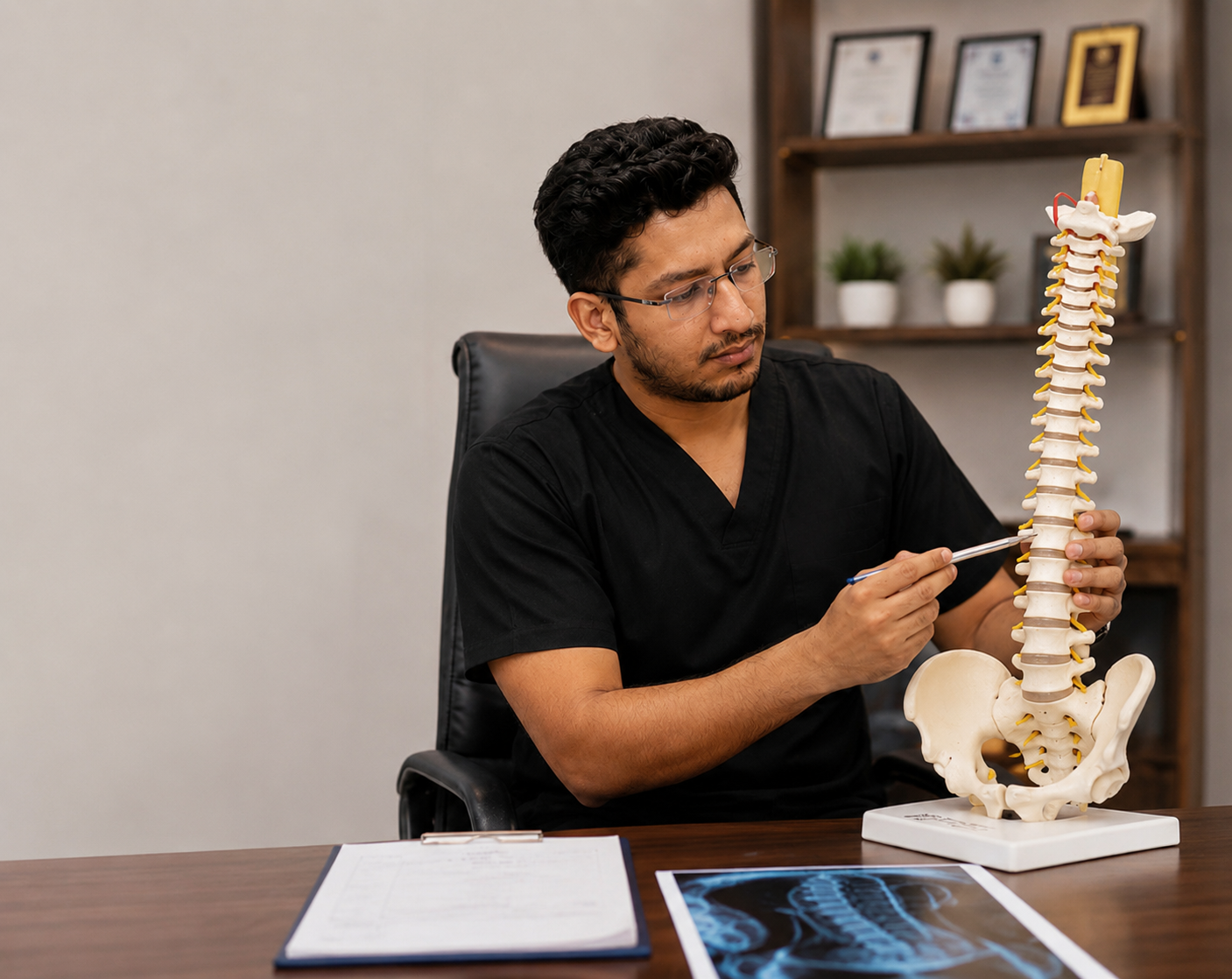
When Should You Consider an Evaluation?
- Persistent groin or hip pain
- Pain while walking, standing or getting up from a chair
- Progressive stiffness and reduced hip movement
- Difficulty with shoes, socks, stairs or daily activities
- Advanced arthritis or AVN on imaging
How the Joint Is Evaluated
- History and focused hip examination
- Pelvis and hip X-rays; MRI in selected conditions such as early AVN
- Assessment of walking, limb length and hip movement
- Medical fitness and pre-operative evaluation when surgery is planned
Treatment & Surgical Planning
- Medicines, activity modification and physiotherapy when appropriate
- Walking aids or other supportive measures
- Total hip replacement for selected advanced joint disease
- Fracture-specific surgery where indicated
- Structured rehabilitation after surgery
Hip Replacement Surgeon in Surat – Frequently Asked Questions
Who may need hip replacement?
Patients with severe hip-joint damage, persistent pain and major functional limitation despite appropriate non-surgical care may be considered after evaluation.
What conditions can lead to hip replacement?
Common reasons include advanced osteoarthritis and selected cases of avascular necrosis; some hip fractures may also require replacement depending on fracture pattern and patient factors.
What is total hip replacement?
The damaged ball-and-socket surfaces are replaced with prosthetic components.
Is every patient with AVN treated with hip replacement?
No. Treatment depends on stage, symptoms, age and joint damage. Earlier stages may have different treatment options.
When can walking begin after surgery?
Mobilization often starts early with support, but weight-bearing instructions depend on the operation and individual patient.
How long does recovery take?
Recovery varies. Walking confidence and daily function improve progressively with healing and rehabilitation.
What precautions are needed?
Precautions depend on surgical approach and patient factors. The treating team provides individualized instructions.
How long does a hip implant last?
Longevity varies with implant, activity, body weight and other factors and cannot be guaranteed.
Can I return to normal activities?
Many patients progressively return to daily activities after rehabilitation, but high-impact activities may need modification.
What are the risks?
Risks can include infection, blood clots, dislocation, fracture, limb-length difference, implant wear and medical complications. These should be discussed individually.
Do I need physiotherapy?
Rehabilitation helps restore walking pattern, strength and confidence and is tailored to the patient.
What should I bring to consultation?
Bring previous X-rays/MRI, medical records, medication list and details of prior treatment.
Related Orthopaedic Services in Surat
Knee Pain & Arthritis
Knee treatment →Hip Pain & Arthritis
Hip treatment →Joint Replacement
Joint replacement →All Orthopaedic Services
View all services →Orthopaedic Care in Vesu & Surat
Patients from Vesu, VIP Road, Piplod, City Light, Bhatar, Athwa, Magdalla, Dumas, Ghod Dod Road, Adajan, Pal and nearby Surat areas can consult for appropriate orthopaedic evaluation. Related searches include Orthopaedic Doctor in Vesu, Orthopedic Doctor Vesu, Orthopaedic Surgeon Surat, Bone and Joint Specialist Surat, Sports Injury Specialist Surat and Fracture Doctor Surat.
Orthopaedic Consultation in Vesu, Surat
Dr. Samarth Thakkar
MBBS | DNB Orthopaedics
201, 2nd Floor, Solaris Kode, Beside Shyam Temple, VIP Road, Vesu, Surat, Gujarat 395007
📞 078385 89031